Tara is a meditation deity whose practice is used by practitioners of the Tibetan branch of Vajrayana Buddhism to develop certain inner qualities and understand outer, inner, and secret teachings about compassion and emptiness. Tara may more properly be understood as different aspects of the same quality, as bodhisattvas are often considered metaphors for Buddhist virtues.
Green Tara is one of the most beloved figures in Tibetan Buddhism. As a bodhisattva, she helps people pass beyond the troubles of earthly existence and move toward enlightenment. She also protects people from numerous worldly dangers. The loving expression on the sculpture’s face embodies Tara’s maternal compassion.
‘Tara’ means ‘Rescuer’. She is so-called because she rescues us from the eight outer fears i.e the fears of lions, elephants, fire, snakes, thieves, water, bondage, and evil spirits, and from the eight inner fears i.e he fears of pride, ignorance, anger, jealousy, wrong views, attachment, miserliness, and deluded doubts.
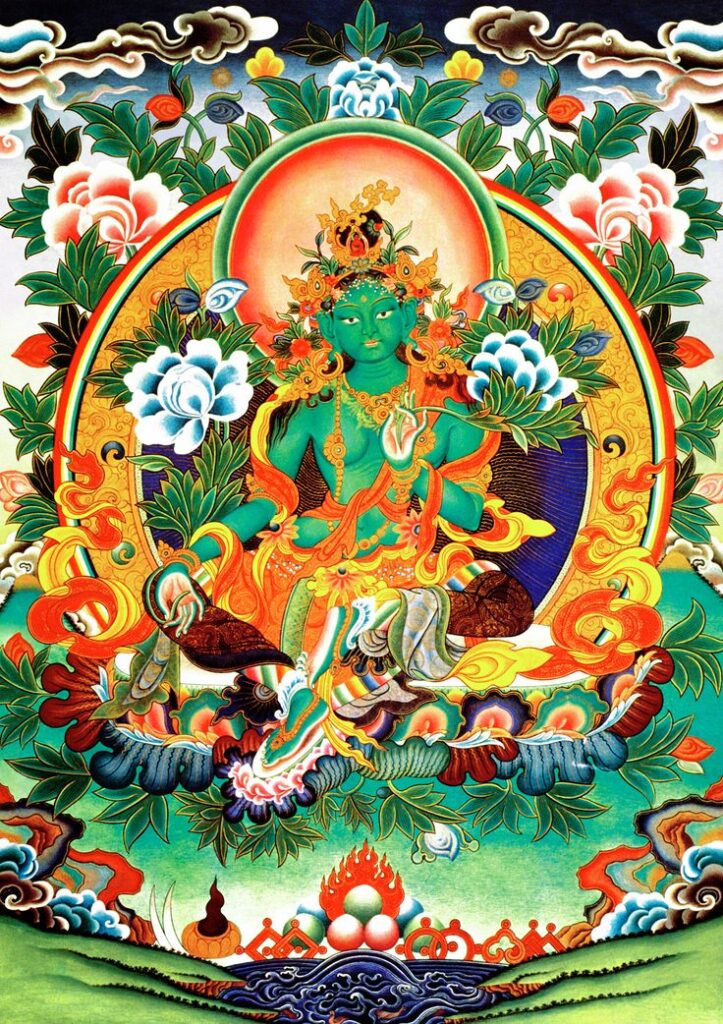
Meaning of Green Tara
The word “Tara” means “She Who Liberates” or “Savioress.” Green Tara represents active compassion — the quick and compassionate action that helps beings overcome suffering.
Her green color symbolizes:
In Tibetan art, Green Tara is often shown seated with:
She is believed to respond quickly to sincere prayers.
Green Tara Prayer
One of the most famous Green Tara mantras is:
This mantra is recited repeatedly during prayer and meditation.

© Nyingma School 2026 • All Rights Reserved
